BNZ – BusinessNZ
Performance of Manufacturing Index

BNZ – BusinessNZ
Performance of
Manufacturing Index

Headwinds ahead

48.1

March

-3.6

Monthly Change

Contracting

Previously Expanding

New Zealand’s manufacturing sector experienced a decline in activity during March, according to the latest BNZ – BusinessNZ Performance of Manufacturing Index (PMI).

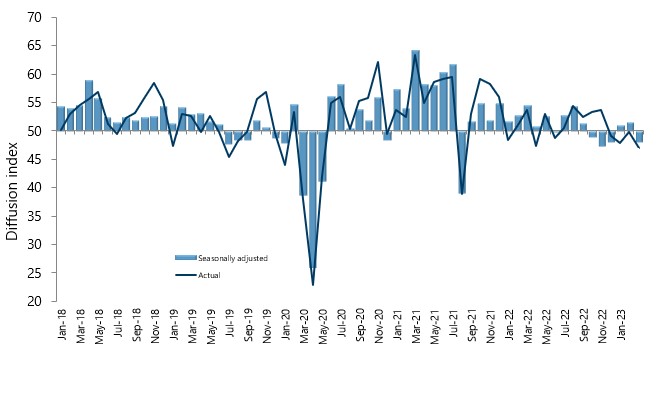
The seasonally adjusted PMI for March was 48.1 (a PMI reading above 50.0 indicates that manufacturing is generally expanding; below 50.0 that it is declining). This was 3.6 points down from February, and well below the long-term average activity rate of 53.0.

BusinessNZ’s Director, Advocacy Catherine Beard said that the numbers behind the main March result showed the manufacturing sector facing some stiff headwinds ahead.

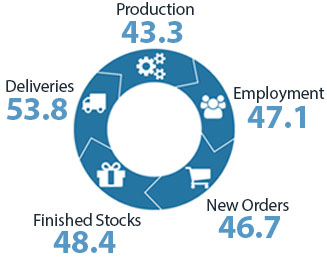
“Looking at the key sub-index values, Production (43.3) dropped to its lowest level of activity since the last nationwide lockdown in August 2021, while New Orders (46.7) fell back into contraction after expansion in February. Employment (47.1) dropped back to the same level as November 2022, while Finished Stocks (48.4) dropped 6.7 points from the previous month. Delivery of Raw Materials (53.8) bucked the trend with its third consecutive lift in expansion.

The drop in activity during March also saw the proportion of negative comments lift to 63.2%, compared with 60.2% in February and 69.9% for January. A general slow down and fall in demand were common threads in comments made.

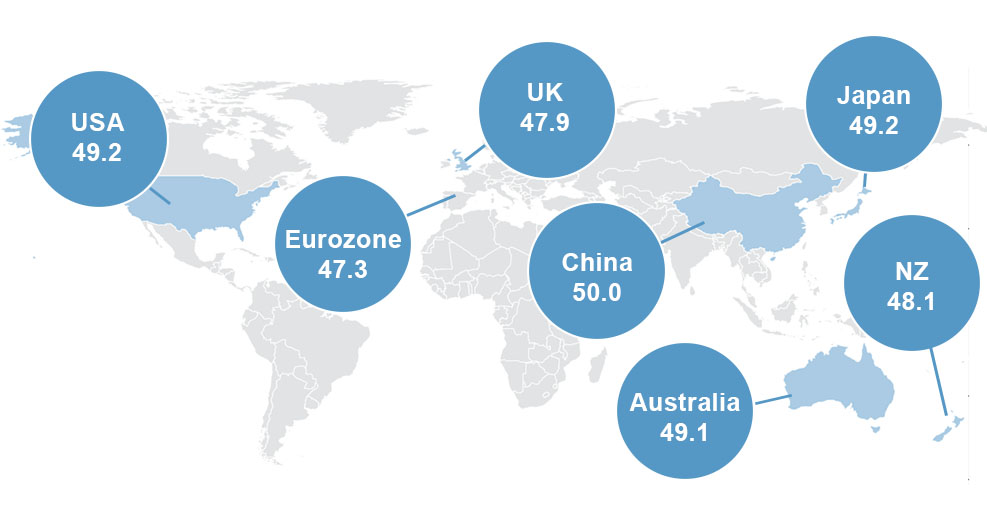
BNZ Senior Economist, Craig Ebert stated that “disappointing as New Zealand’s March PMI was, it wasn’t especially negative in longer-term context. Neither was it much out of line with manufacturing readings across the world of late”.
Catherine Beard

Director, Advocacy BusinessNZ

Manufacturing Snapshot

PMI

The Performance of Manufacturing Index (PMI) stumbled back into mildly negative territory in March, with a seasonally adjusted reading of 48.1.

Read more

Principal paucity

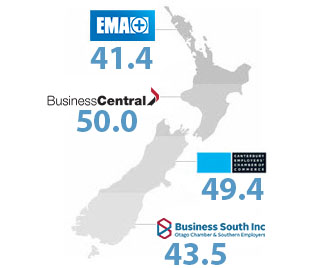
In terms of the regional results, Central, which includes the districts most afflicted by the recent storms – namely Hawke’s Bay and Gisborne – logged an unadjusted level of 50.0, from 42.2 in February.

Read more

QSBO

Manufacturers’ responses to last week’s NZIER Quarterly Survey of Business Opinion (QSBO) were also downbeat with respect to recent performance.

Read more

Global reference

Disappointing as New Zealand’s March PMI was, it wasn’t especially negative in longer-term context. Neither was it much out of line with manufacturing readings across the world of late.

Read more

Craig Ebert

Senior Economist, BNZ

Sponsor Statement

BNZ is delighted to be associated with the Performance of Manufacturing Index (PMI) and BusinessNZ.

This association brings together the significant experience of leading business advocacy body BusinessNZ, and business finance specialist BNZ.

We look forward to continuing our association with BusinessNZ and associated regional organisations, and to playing our part in the ongoing development of the New Zealand manufacturing sector.

PMI Time Series Table

The results are seasonally adjusted

National Indicies Mar 2022 Nov 2022 Dec 2022 Jan 2022 Feb 2023 Mar 2023
BNZ – BusinessNZ PMI 54.6 47.3 48.0 51.0 51.7 48.1
Production 51.3 49.5 49.7 51.6 48.7 43.3
Employment 52.5 47.1 49.8 51.5 55.2 47.1
New Orders 58.6 42.5 48.6 49.0 51.5 46.7
Finished Stocks 54.1 55.5 49.8 52.4 55.1 48.4
Deliveries 50.6 49.7 48.6 52.0 52.2 53.8

BNZ - BusinessNZ PMI Time Series

January 2018 – March 2023

International Results

J.P. Morgan Global Manufacturing PMI

03 Apr 2023
49.6

Stephen Summers

Economist, BusinessNZ

About The PMI

The BNZ – BusinessNZ Performance of Manufacturing Index is a monthly survey of the manufacturing sector providing an early indicator of activity levels.

A PMI reading above 50 points indicates manufacturing activity is expanding; below 50 indicates it is contracting.

The main PMI and sub-index results are seasonally adjusted.

Technical Contact

Mark Cox
Economist, BusinessNZ

[email protected]

Our Contributors

The BNZ – BusinessNZ PSI contains data obtained through BusinessNZ’s regional organisations