Despite another dip in expansion, manufacturing activity managed to keep its head above water, according to the latest BNZ – BusinessNZ Performance of Manufacturing Index (PMI).
The seasonally adjusted PMI for September was 50.8 (a PMI reading above 50.0 indicates that manufacturing is generally expanding; below 50.0 that it is declining). This was down from 52.7 in August, along with an average result of 52.7 for the first nine months of 2011.
BusinessNZ’s executive director for manufacturing Catherine Beard said that the fourth consecutive slip in expansion was disappointing in terms of building momentum for the sector.
“The overall PMI result for September showing minor expansion almost parallels the views by respondents being evenly split in terms of major influences on business activity being positive or negative. On the negative side of things, comments received tended to focus on a lack of both domestic and offshore orders, while positive comments were spread amongst various influences, with no one issue dominating.
“With Xmas soon approaching, it will be interesting to see if the slow slide can be abated with a pick-up in production and new orders.”
BNZ economist Doug Steel noted some stiff headwinds that the manufacturing sector has faced over recent times, such as weak domestic construction, a generally strong NZ dollar and concern around world economic growth.
“Still, we take some solace from the fact that the PMI remains above the 50 mark, even with the headwinds outlined. And we remain optimistic for manufacturing as some of these headwinds are expected to at least abate or even become tailwinds next year.”
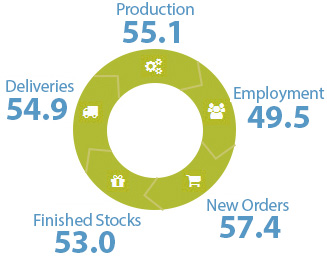
Despite another dip in expansion, four of the five seasonally adjusted main diffusion indices were still in expansion during September. New Orders (51.5) led the way, followed by employment and finished stocks (both at 51.2). Production (50.8) fell to its lowest level since March 2011, while deliveries (49.7) dipped into contraction for the first time since March 2011 as well.
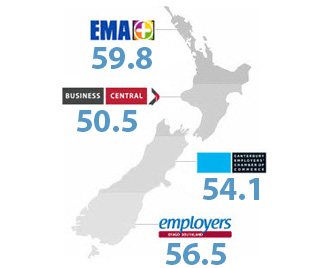
Unadjusted results by region showed that the Northern region (47.4) fell into contraction for the first time since January 2011, which was also the main reason for the lower overall PMI value for September. In contrast, the Central region (53.2) recovered from its flat patch the previous month. In the South Island, the Canterbury/Westland region (57.4) built on results from July and August, while the Otago/Southland region (60.1) produced another strong result.
Click here to view the September PMI
Click here to view the PMI time series data
For media comment
Stephanie Moakes, ph 04 496 6554 or 021 959 831
Doug Steel, ph 04 474 6923